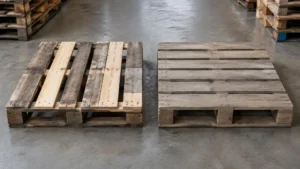
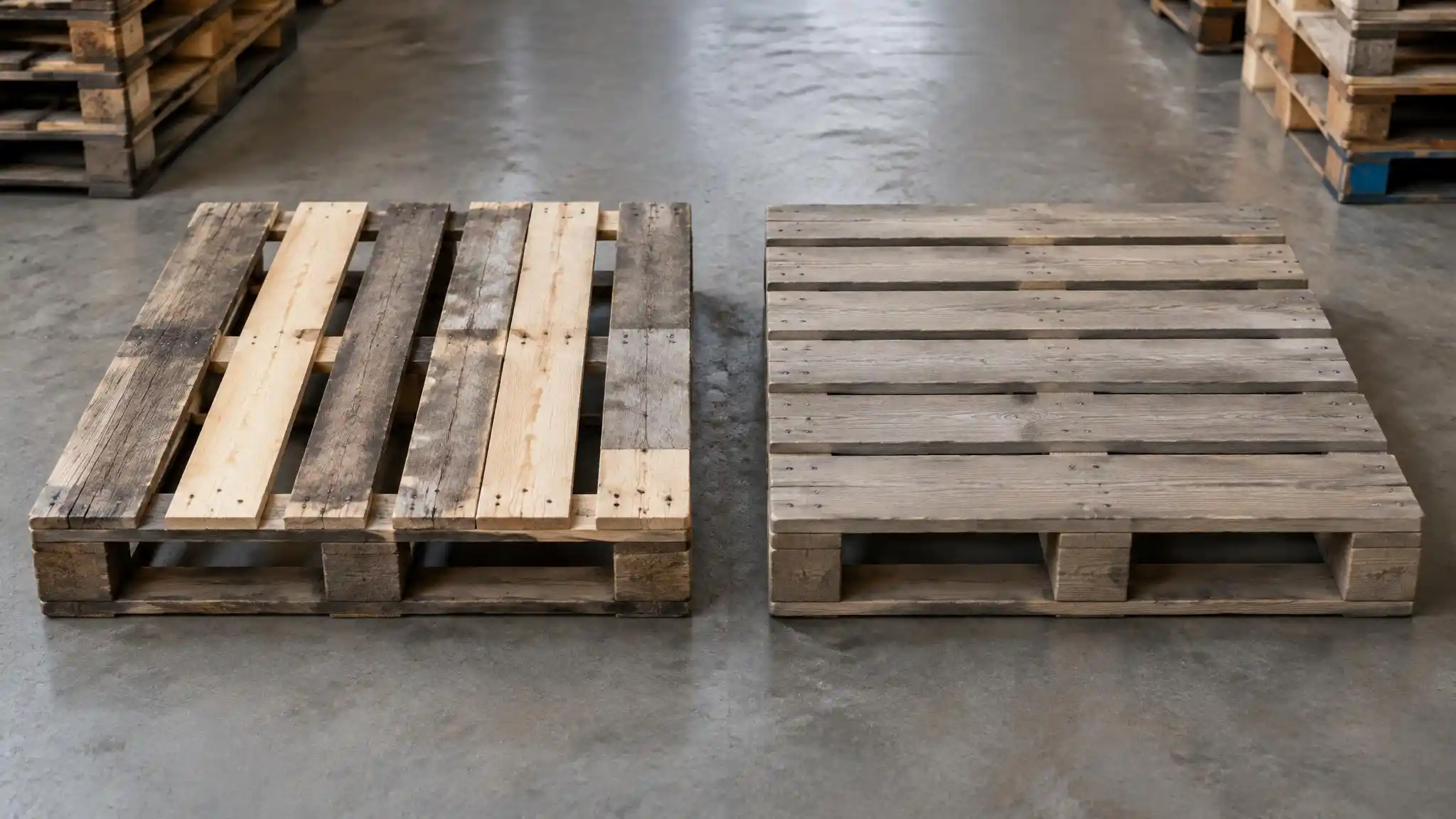
Repaired and remanufactured wood pallets both keep usable material in circulation, but the terms do not always describe the same product. One supplier may call a pallet repaired after replacing a damaged deck board. Another may use “remanufactured” for a pallet assembled from selected recovered components. “Reconditioned” may refer to either process.
For buyers, the label matters less than the specification behind it. Before comparing price or availability, define the pallet dimensions, construction, condition, tolerances, inspection criteria, load and handling requirements, and any heat-treatment needs.
What Is a Repaired Pallet?
A repaired pallet generally begins as an existing pallet that remains identifiable as the original unit. Damaged or missing components may be replaced so the pallet can return to service.
Repairs can include replacing deck boards, securing loose components, addressing fasteners, or repairing stringers according to the supplier’s process and the intended pallet specification. The exact repair method should be confirmed because acceptable repairs differ by pallet design, customer program, and use.
A repaired pallet may be appropriate when buyers operate a known pallet pool, receive consistent sizes, or need a defined used-pallet grade. The order should state which defects are acceptable and which require rejection.
What Is a Remanufactured Pallet?
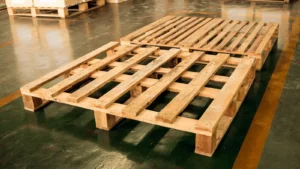
A remanufactured pallet is commonly built using recovered wood components selected from pallets that can no longer be returned to service as complete units. Usable boards, stringers, or blocks are sorted and assembled into a specified pallet.
The result should be evaluated as a finished pallet, not assumed to match every characteristic of a new pallet. Buyers need to know the design, component dimensions, allowable repairs or plugs, fastener pattern, appearance grade, and inspection criteria.
Because terminology varies, ask the supplier to explain whether the pallet is rebuilt to a standard design, made to a buyer-provided drawing, or produced as an available mixed-component grade.
How Repaired and Remanufactured Orders Differ
The purchasing distinction often comes down to the unit being supplied:
- A repaired pallet is an existing pallet returned to service after defects are addressed.
- A remanufactured pallet is assembled or rebuilt using recovered components that have been sorted for reuse.
That distinction alone does not determine performance. A consistent specification and inspection process are more useful than assuming that all repaired pallets are identical or that all remanufactured pallets follow one industry-wide definition.
Specifications Buyers Should Confirm
Pallet dimensions and entry
State the overall length and width, height limits, fork-entry direction, and equipment clearances. Confirm whether the pallet will be handled by forklifts, pallet jacks, conveyors, automated systems, or more than one type of equipment.
Construction
Identify the required number, size, and position of deck boards, stringers or blocks, lead boards, and bottom boards. If a drawing controls the order, include its revision number.
Condition and appearance
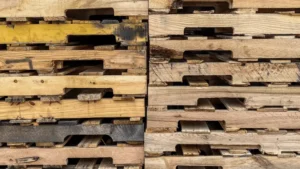
Define acceptable splits, checks, staining, bark, missing wood, protruding fasteners, and previous markings. Cosmetic expectations should be separated from structural rejection criteria.
Tolerances
Recovered wood components may vary. Buyers using racking, conveyors, automated handling, or tight packaging systems should specify the dimensions and tolerances the pallet must meet.
Load and handling requirements
Provide accurate product weight, weight distribution, stacking method, storage condition, and handling route. Avoid transferring a load claim from a different pallet design without verification.
Treatment and markings
If pallets will enter an international route, confirm the applicable phytosanitary requirements. Heat-treatment eligibility, treatment records, and markings should be handled separately from the repaired or remanufactured grade. A recovered pallet is not automatically suitable for export.
Questions to Ask a Supplier
Before approving an order, buyers can ask:
- How do you define repaired, reconditioned, and remanufactured pallets?
- Which components may be recovered, replaced, or repaired?
- What inspection points are used before a pallet is released?
- Is the order built to a drawing, a named grade, or an available-stock description?
- What dimensional variation should the buyer expect?
- Can a sample pallet or trial quantity be reviewed before repeat orders?
- How are contaminated, severely damaged, or unsuitable components excluded?
- What records are available for heat treatment when the shipping route requires it?
Written answers help purchasing and receiving teams inspect against the same expectations.
When a Repaired Pallet May Fit
A repaired pallet may fit a program with a stable pallet design and established repair rules. It can also suit operations that exchange or recover the same pallet type and want serviceable units returned to circulation.
The buyer should still define the grade and check whether repairs are compatible with racking, automation, food or pharmaceutical quality programs, customer rules, and export requirements where applicable.
When a Remanufactured Pallet May Fit
A remanufactured pallet may suit buyers who can use recovered components while requiring a specified finished size and construction. It may also be considered when new-lumber appearance is unnecessary but repeatable functional criteria remain important.
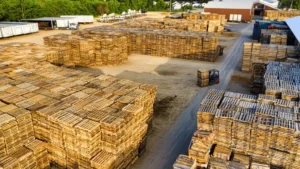
Availability can depend on the recovered material stream. Discuss required volumes, component specifications, and consistency with the supplier rather than assuming every design can be produced from recovered stock on demand.
Approve the Product, Not Just the Label
A sample or first-article review can help the warehouse team confirm fork access, carton support, stacking, and equipment fit. Record the approved configuration with photos or a drawing, then use the same criteria for receiving inspections.
If requirements change, update the pallet specification. A repaired or remanufactured pallet that works for one product and route may not suit a heavier load, different carton footprint, new conveyor, or overseas destination.
Discuss Recycled Pallet Options With AR Pallets
AR Pallets supplies recycled wood pallet options for businesses in Surrey and the Lower Mainland. The team can review dimensions, construction, handling conditions, and available recovered-pallet options for a specific order.
Explore our recycled pallets in Surrey and share your pallet drawing, load details, receiving requirements, and expected order pattern. AR Pallets can then confirm what product description and specifications are appropriate before you order.