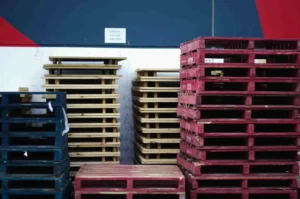

In today’s fast-paced supply chain landscape, warehouses serve as the backbone of business operations. Whether you’re handling e-commerce fulfillment, retail distribution, or industrial logistics, one factor remains critical—effective pallet storage. Optimizing how and where pallets are stored not only enhances space utilization but also boosts picking efficiency, reduces handling time, and supports safer operations.
This in-depth guide explores strategies for optimizing pallet storage in your warehouse and how smart warehouse management practices can transform your logistics efficiency from average to exceptional.
✅ What Is Pallet Storage in Warehouse Management?
Pallet storage refers to the method of organizing, storing, and retrieving goods on pallets within a warehouse environment. Because pallets are the standard platform for storing and transporting goods, they represent a crucial component of warehouse layout and workflow.
Efficient pallet storage directly impacts:
- Inventory visibility
- Space utilization
- Product accessibility
- Safety and ergonomics
- Labor productivity
Warehouses that optimize their pallet storage systems can scale faster, reduce costs, and maintain smoother operations—even as inventory volumes grow.
🧠 Why Optimizing Pallet Storage Is Essential
1. Maximizing Space Utilization
Warehousing costs are among the highest logistics expenses for many businesses. Inefficient storage leads to wasted square footage and the need for larger facilities than necessary. By optimizing your pallet storage system, you can increase vertical and horizontal space use without expanding your footprint.
2. Improving Inventory Accuracy
Disorganized pallet placement often results in miscounts, misplaced stock, and excess inventory. Smart storage systems make it easier to locate and manage stock, improving inventory accuracy and reducing shrinkage.
3. Enhancing Order Picking Efficiency
Faster and more accurate picking processes lead to better customer satisfaction. When pallets are stored strategically, pickers can access high-demand products more quickly, reducing walking distances and pick times.
4. Reducing Damage and Safety Risks
Poorly stored pallets increase the risk of accidents, product damage, and injuries. An optimized layout supports safer forklift paths, minimizes handling, and keeps walkways clear.
📦 Types of Pallet Storage Systems
Choosing the right pallet storage system is foundational to warehouse optimization. Here are the most common systems used in modern facilities:
1. Selective Pallet Racking
The most widely used system, selective racking provides easy access to every pallet, making it ideal for high SKU counts and first-in, first-out (FIFO) inventory.
Benefits:
- High accessibility
- Ideal for fast-moving inventory
- Lower setup costs
Limitations:
- Lower storage density
- Less suitable for bulk storage
2. Drive-In / Drive-Through Racking
These high-density systems allow forklifts to enter racking lanes, storing multiple pallets deep.
Benefits:
- Maximizes space
- Ideal for last-in, first-out (LIFO) items
- Fewer aisles needed
Limitations:
- Limited selectivity
- Higher potential for pallet damage
3. Push-Back Racking
Push-back racking stores pallets on wheeled carts that move along rails. When a new pallet is added, it pushes the previous pallet back.
Benefits:
- High-density storage
- LIFO inventory method
- Better selectivity than drive-in
Limitations:
- Not suitable for FIFO inventory
- Slightly higher capital costs
4. Pallet Flow Racking
Also known as gravity flow racking, pallets are loaded on inclined rollers and move forward with gravity as pallets in front are removed.
Benefits:
- True FIFO inventory
- Excellent for perishable or dated products
- High density with reduced labor
Limitations:
- More complex and costly to install
- Not ideal for mixed-SKU pallets
🔍 Key Factors to Consider When Optimizing Pallet Storage
1. Warehouse Layout Design
An efficient layout considers aisle width, rack placement, docking zones, and flow of movement. Narrow-aisle configurations may improve space usage, but wide aisles may speed up forklift movement.
Best Practice: Design layouts with minimal traffic conflicts, logical product zones, and clear paths for both people and machines.
2. Inventory Type and Turnover Rates
Categorize products based on how frequently they move (A, B, C inventory):
- A-items: High-turnover goods should be placed near picking zones
- B-items: Medium-demand products stored in moderately accessible areas
- C-items: Slow movers stored in higher or remote racks
Best Practice: Regularly re-slot inventory based on changing turnover data.
3. Pallet Dimensions and Weight
Standard pallet sizes are typically 48″ x 40″, but variations exist. Ensure your racking system accommodates your pallet types without overhang or instability.
Best Practice: Use adjustable racking systems and conduct weight audits to prevent overloading racks.
4. Equipment Compatibility
Ensure the storage design aligns with the type of material handling equipment used (e.g., counterbalance forklifts, reach trucks, order pickers).
Best Practice: Match rack depth and aisle width to your forklift specifications for maximum maneuverability.
🛠 Strategies for Improving Pallet Storage Efficiency
1. Adopt a Slotting Strategy
Slotting is the process of determining the best location for each product in the warehouse based on demand, weight, and picking frequency.
How it helps:
- Reduces travel time
- Speeds up order picking
- Balances workload
2. Implement ABC Analysis
Classifying inventory into A, B, and C categories allows you to prioritize high-demand items and optimize their storage locations for quicker access.
3. Utilize Vertical Space
Going higher with racking—if ceiling clearance and safety protocols permit—can drastically increase storage capacity without expanding your facility.
Tips:
- Use taller racking with narrower aisles
- Upgrade forklifts to handle vertical reach
- Follow OSHA height regulations and loading limits
4. Automate Where Possible
Automation technologies like automated storage and retrieval systems (AS/RS) and pallet shuttles can help:
- Reduce labor
- Increase throughput
- Improve accuracy
While the upfront investment is significant, automation pays off in long-term efficiency gains.
5. Regularly Audit and Reorganize
Inventory and operations evolve. Conduct regular storage audits to identify underutilized space, outdated product placements, or damaged racking.
📊 Warehouse Management Systems (WMS): The Backbone of Storage Optimization
A modern WMS is essential for overseeing, analyzing, and optimizing pallet storage operations. It integrates real-time data and provides insights into:
- Slotting optimization
- Inventory levels and turnover rates
- Labor productivity
- Pick-and-pack efficiency
When paired with RFID, barcode scanning, or smart pallets, a WMS offers unparalleled control over pallet storage and inventory management.
🧱 Safety and Compliance in Pallet Storage
Efficiency should never come at the expense of safety. Ensure your pallet storage systems comply with all local and national safety standards.
Best practices include:
- Clearly marked weight limits on racking
- Regular inspections of pallet conditions
- Ensuring even weight distribution on racks
- Clear signage and floor markings
- Adequate lighting and fire suppression systems
Poorly stacked or overloaded pallets are a leading cause of warehouse accidents and must be addressed through training and ongoing supervision.
🧭 Planning for Growth: Future-Proofing Your Storage System
As your business scales, your storage system should be ready to scale with it. Choose racking systems and layouts that offer modularity and can be reconfigured to accommodate:
- Product line expansion
- Seasonal fluctuations
- Changes in order volume
This flexibility reduces downtime, avoids costly overhauls, and supports sustainable growth.
🔚 Conclusion: Make Every Pallet Position Count
Optimizing pallet storage is not just about fitting more goods in a warehouse—it’s about maximizing every square inch of space while improving operational speed, accuracy, and safety.
To recap, optimizing pallet storage requires:
- Choosing the right racking system
- Using smart layout and slotting strategies
- Applying automation and data analytics
- Maintaining safety and planning for scalability
With a strategic approach and ongoing analysis, warehouse managers can transform pallet storage from a simple necessity into a competitive advantage.