An empty pallet on your loading dock is not automatically yours to sell, recycle or discard. Before clearing a stack of used wood pallets, check who owns them.
That distinction matters when rental or pooled pallets arrive with incoming goods. Your business may receive the products without acquiring ownership of the pallets underneath them.
For warehouse and procurement teams, checking pooled pallet ownership should come before deciding what happens to surplus stock.
How rental pallets differ from owned pallets
In a pooling arrangement, pallets circulate through a managed network. CHEP’s Canadian website describes its system as a rental model in which CHEP manages retrieval and quality assurance. Its pallets are supplied for use within that system rather than sold to customers. CHEP Canada: How CHEP works
Owned wood pallets are a different category. If your business purchased them and has the right to make disposal decisions, you can assess their next use according to their condition and your operational requirements.
The first sorting decision is therefore ownership. Whether a pallet looks reusable or damaged comes next.
Check markings before moving pallets into a recycling stack
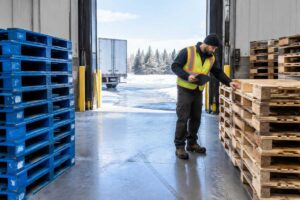
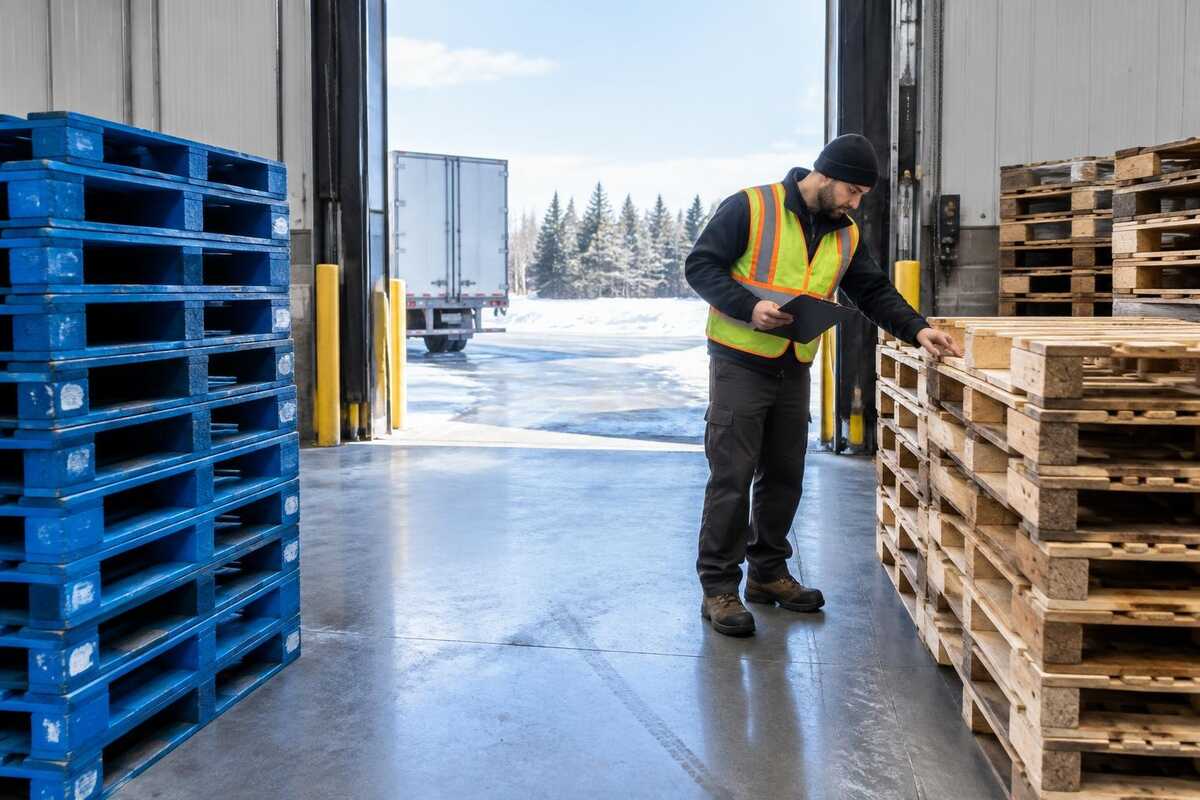
CHEP identifies its pallets by blue paint and ownership markings. Its guidance states that CHEP retains ownership and does not permit its pallets to be bought, sold, exchanged, traded or discarded. CHEP pallet ownership guidance
Use colour as a prompt to inspect more closely. Look for the operator’s name, logo or wording identifying the owner. If the markings are unclear, do not treat that uncertainty as permission to recycle the pallet.
A practical ownership check can include:
- Inspecting the pallet for readable owner markings.
- Reviewing purchase and receiving records.
- Asking the sender whether the pallet belongs to a rental or return programme.
- Keeping unresolved pallets separate while ownership is confirmed.
An unpainted pallet also needs an ownership check. Appearance alone does not establish your business’s right to sell or dispose of it.
Return blue pallets through the owner’s process
Once a pallet is identified as CHEP equipment, follow CHEP’s return process. Contact the operator directly for the applicable collection instructions.
CHEP’s return guidance also addresses damaged pallets: it collects them for assessment, repair or recycling within its own system. Damage therefore does not make a CHEP pallet available for independent disposal. CHEP: Returning blue pallets
For other pooled equipment, contact the owner identified on the pallet. Keep operator instructions with your receiving procedures so staff know where to direct future returns.
Assess owned pallets separately
After confirming ownership, review the pallets your business controls. A simple internal sorting system can distinguish pallets suitable for continued use, those needing assessment and those intended for an agreed disposal route.
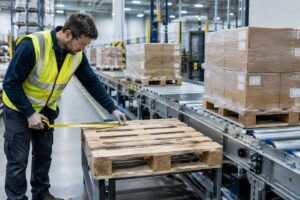
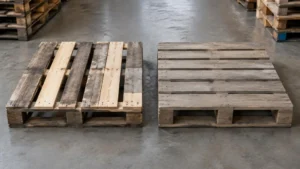
Record dimensions, construction and visible condition rather than grouping every wood pallet together. Keep damaged or questionable pallets out of working stock until their suitability has been assessed.
If you need replacement stock, AR Pallets supplies recycled pallets in Surrey. Available options vary by size, design, condition and quantity, so provide your load and handling requirements when asking about suitability.
Check replacement requirements before ordering
Replacing owned pallets is also an opportunity to confirm what your operation needs. Prepare the pallet dimensions, expected load, required quantity, intended use and delivery location.
An available recycled pallet may suit routine shipping or storage. Where a particular footprint or construction is essential, discuss the specification before ordering. AR Pallets’ custom pallet options in Surrey provide another route for requirements that need a tailored build.
Keep purchasing and returns records clear. This helps the next person handling the pallet distinguish company-owned stock from equipment that must go back to its operator.
Plan your next order after sorting ownership
Once pooled pallets are separated for return, review the wood pallets you need for upcoming shipments. Call AR Pallets at (604) 396-7884, or use the contact form with your preferred size, quantity, load and delivery location to ask about suitable recycled stock. Direct rental pallet returns to the identified pool operator.